Applying Integrated Approaches to Environmental Conservation: Fazenda São Paulo Agroforestry Project
The climate crisis we are currently witnessing is so complex that no one single approach can mitigate it. It calls for an integrated approach that combines several innovative technologies and conservation measures to be applied. To restore biodiversity and combat the impact of deforestation the wisdom of the indigenous community is needed. This is one truth that Sara Roversi, Founder of Future Food Institute, knows all too well. According to her, attaining the SDGs is important to the future of the food industry and should be at the heart of any environmental conservation efforts.
A healthy ecosystem protects a wide range of species while at the same time making it possible for mankind to derive his livelihood sustainably. We live around forests, mountains, savannahs, and wetlands which all provide a wide range of benefits to us that range from clean water, air purification, the raw material for industry, protection for biodiversity, and climate change control among others. Forests in particular have been found to provide a wide range of commercial benefits specifically as a source of employment, providing raw materials for industry, as a source of food to local communities, a source of indigenous medicine, and as fuel. However, these benefits lead to over-harvesting which in turn degrades the environment and destroys the biodiversity protected by the forests.
Over the past century alone the world has lost over 80% of its forest cover to deforestation. This has resulted in a decrease of clean water available to local communities, increased cases of soil erosion, loss of important habitat, land degeneration, and increased volumes of carbon in the atmosphere. In addition, people have lost their livelihoods and economies have suffered.
Agriculture is by far the largest contributor to deforestation. The most affected individuals are indigenous people who rely on subsistence agriculture for survival. They are only 5% of the global population but occupy over 80% of the world’s most biodiversity regions. This means that all efforts to conserve the environment must not only involve the indigenous community but their rich knowledge on nature and how to conserve it should be incorporated in any environmental conservation approach.
The indigenous communities across the world have a deep connection to nature. Over the years they have developed ingenious methods to live in harmony with Mother Nature. Learning this indigenous community wisdom can help enrich the modern methods used in environmental conservation. This is the key to addressing the climate change crisis we are currently facing.
The Fazenda São Paulo Agroforestry Project
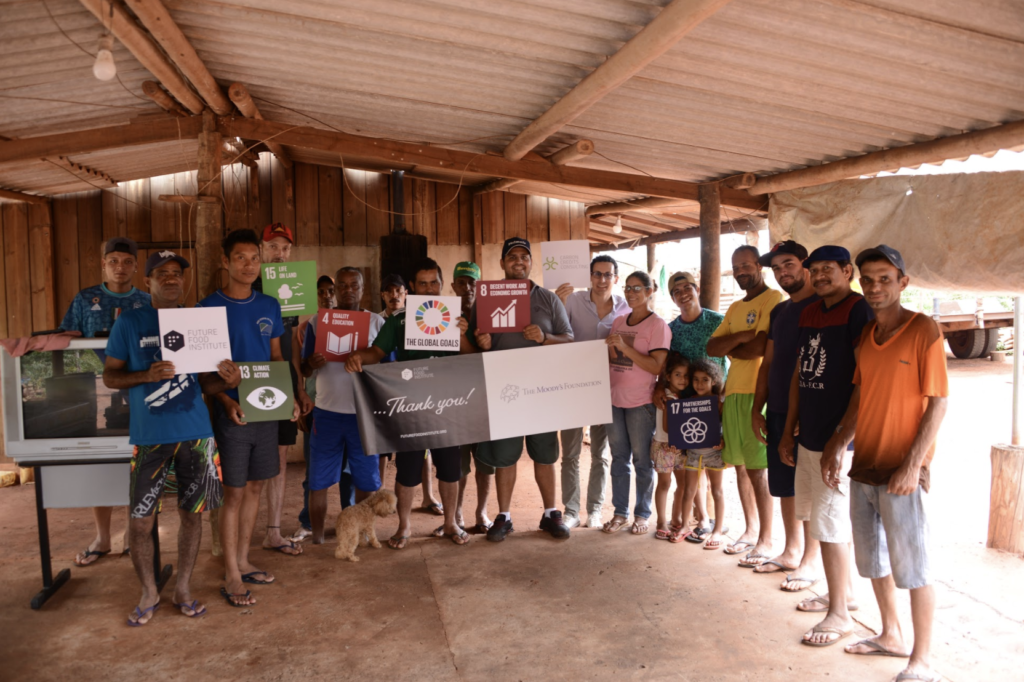
This Forestry carbon project in Mato Grosso do Sul – Brazil was launched in 2013 to help in the degraded land recovery, forest plantation, biodiversity, and wildlife protection. Funded by Moody’s Foundation and implemented by Sara Roversi, Founder of Future Food Institute, the project sought to combine local knowledge and modern innovations and apply them to environmental restoration projects.
Mato Grosso do Sul, or simply “the southern bushes” in English, is an area that relies heavily on agriculture. This has over the years destroyed a wide variety of flora and fauna, forests, and bushes as farmers seek to expand their farmlands to increase productivity. This has led to serious environmental concerns as it has threatened local rivers. This region was thus chosen because of the level of degradation and the accessibility to indigenous communities that have lived in the Amazon rainforest for millennia without destroying their surroundings. Their deep knowledge of environmental conservations is vital in the restoration of the degraded land areas.
This Forestry carbon project was therefore designed to help Mato Grosso do Sul make the shift to sustainable farming and also help Brazil achieve its national climate change goals of reducing emissions by 37% when compared to 2005 levels by applying the indigenous methods in combination with modern technologies.
The project has made some major strides since its launch in 2013. Up to date, the project has helped promote local biodiversity by creating new spaces for the recovery of the lost flora and fauna and has helped in the capture of more than 250,000 tonnes of CO2 from the atmosphere. This has only been possible by applying integrated approaches to the whole process of environmental conservation.
The indigenous community across Brazil has lived in harmony with nature for centuries without causing any problems to the environment. By learning and integrating this indigenous wisdom with the latest innovative technologies and applying them to conservation this project has been able to reverse some of the adverse effects that uncontrolled agriculture has had on the region.
The truth of the matter is that nature provides mechanisms for managing itself. It is the best tool that we have to reverse years of pollution. For example, today the safest, easiest, and most cost-effective way to capture greenhouse gasses from the atmosphere is by planting trees. This is easy and simplest when compared to other available options that may require high levels of skill and may pose a threat to the same environment as they rely on dangerous chemicals.
The Forestry carbon project in Mato Grosso do Sul – Brazil was not designed to work in a vacuum. The key to environmental conservation and reversing the effects of environmental degradation is to work with local communities. This project, therefore, was designed to help create awareness on environmental issues among the local community, especially how to save rainforests and other important biodiversity spaces. The projects thus work closely with local farmers to make sure they have a better understanding of environmental degradation and how it affects them.
According to Sara Roversi, this drive to work with the local community is backed by the desire to help the poor communities achieve the united nation’s sustainable development goal number 15 which is all about improving ‘life on land’. Protecting both land and water biodiversity is important in ensuring sustainable living; however, the world has been losing its biodiversity at a faster rate than ever imagined to human activities such as urbanization and expansion of cropland. This has largely resulted in increased pollution, reduced farm production, and growing environmental concerns. The project aims to help restore and create a sustainable system for the use of inland water in the area.
To do this the project sought to employ integrated and holistic approaches to attain the following objectives:
– Restore and protect local forests
– Mitigate against extreme climatic events
– Grow decarbonization
– Arrest forest degradation
– Conduct reforestation
Mato Grosso do Sul situation before the Project
Just like the rest of the world, the Mato Grosso do Sul region had experienced extreme climate change over several decades. This included a rise in temperature, irregular rainfall, and increasing environmental pollution. The region was among many that recorded an alarming loss of species in the country. Being an agriculture-dependent region, the Mato Grosso do Sul experienced a loss of productivity as the agriculture was affected by the change in local climatic conditions. Some of the major challenges experienced by the locals before the project include:
Extreme Fires and Floods
Wildfire and flooding are not new to Mato Grosso do Sul. The region has experienced annual flooding in some parts over several decades now. However, at the turn of the millennium, the flooding got worse due to the effects of climate change. From the mid-1990s the region experienced irregular rainfall that was often accompanied by extreme flooding that affected not only the crops but also thousands of people.
The irregular rain patterns were also responsible for extremely long dry periods that created the perfect environment for wildfires to spread. This burned down vast areas including farmlands, homes, and forests, displacing people and sometimes ending in tragedy. This lowered the quality of life for many residents who depended on agriculture.
Unsustainable Agricultural Practices
The major cause of environmental degradation in Mato Grosso du Sul is unsustainable agricultural practices. The region’s economy is heavily reliant on agriculture. As the population grew, more and more land was cleared for agricultural use. This affected biodiversity, led to deforestation and affected water flow as more trees were cut down. Generally, Brazil has recorded more deforestation than any other country in the world in the past century alone.
The use of modern machinery and chemicals has also increased both air and groundwater pollution. This has had a huge impact on the quality of life, not just for people in the area but also for life in local waterways. Local rivers have experienced a drop in the amount of water.
Today agriculture in Mato Grosso do Sul is threatened as production has dropped due to extreme climate change conditions. These are the direct consequence of its impact on the environment. In the 1980s and 1990s, Mato Grosso do Sul became one of the leading soybean producers in the country; this led to the commercialization of farming in the area and, to a large extent, to deforestation as more forest land was cleared to pave the way for farming. This has had a direct impact on the climate as reduced forest cover has seen a drop in the annual rainfall received in the area.
Deforestation
Today Mato Grosso do Sul is one of the leading producers of Soybeans, cattle, corn, and several other agricultural products in Brazil. This has not always been the case. In the 1970s the government put in policies to encourage agricultural production. This resulted in an increase in the production of soybeans from 15 million tonnes in 1980 to 69 million tonnes in 2010. The Mato Grosso contributes more than a quote of this production. In addition, the heads of cattle in the country grew from 120 million in 1980 to 210 million in 2010 with a huge chunk of these in Mato Grosso do Sul due to its vast savanna grasslands.
This magnificent increase in agricultural productivity has hurt the environment. To increase productivity more land was made available for agriculture. This has been mainly clearing of local forests to create room for agriculture. The growing demand for Brazilian beef and soybean in international markets led the deforestation to peak in the early 2000s as more and more land space was a need for agriculture. Most of the Amazon forest deforestation that happened during this time happened in the Mato Grosso region.
Charcoal Burning
Mato Grosso do Sul is also known for its charcoal production. The state is home to many charcoal factories where thousands of men and women are employed to work the ovens producing charcoal for the whole country. Many other factories including steel plants depend on charcoal as their main source of energy.
The charcoal industry has two main devastating impacts on the environment. The charcoal industry is a major contributor to deforestation in the state. Charcoal production consumes more trees than the timber industry in the country. This can explain the high rate of deforestation still happening in the country. Besides, charcoal burning produces a thick greasy smoke that passes carbon into the atmosphere contributing to the ever-growing greenhouse gasses crisis. However, some progress has been made since 2010 in reducing the impact of the charcoal industry but still more needs to be done.
Benefits of the Project
Ever since its inception in 2013 the Fazenda Sao Paulo Agroforestry Project has offered many benefits to the local community and the local environment.
Some of the key benefits of this project improvement and enrichment of a completely degraded land area. One of the first steps of the project was to work with local farmers to rehabilitate the degraded lands. Starting with one farmer the project has been able to rehabilitate a completely degraded land area by relying on a combination of indigenous knowledge and modern technology. This progress is important in educating other farmers in the area in how to rehabilitate their farmlands to practice sustainable farming.
As part of its reforestation efforts, the project has seen about 478,000 eucalyptus trees planted on a surface of 287 hectares of land. This forest plays an important role in purifying the air and increasing the area’s biodiversity. It is estimated that the forest captures about 33,314 tCO2e annually. The new forest is an alternative natural refuge for birds and mammals, providing them with food and protection, which previously did not exist.
Other than the forest, the project has also successfully restored 287 hectares of native savannah. This area is divided into 7 areas inside the Project Zone. All these areas are connected by the planted areas that act as a biological corridor for local fauna. This restoration has led to the attraction of endangered species that have found shelter and food within the forest, thus helping in the restoration of the local biodiversity.
The project has generated new jobs for members of the local community. This in itself has benefited the community in many ways. First of all because of the jobs, but it has also brought money in the local economy by providing workers with income that not only improve their own life but indirectly contribute to the living standards of the region. In addition, local workers have been empowered with knowledge in agroforestry management which they can apply to their farms, leading to further development of environmental conservation projects in the area.